Imagine the following situation.
You hire a salesperson for your company. You pay his or her contributions, provide him or her with an office and a laptop. Then the first day of work comes and this person sits in the corner. He doesn't talk to anyone. When a client comes in, he silently hands them a business card with the company name and address on it, and sits back down.
You do not ask what the buyer needs. Does not offer a solution. Does not ask for your contact details.
How long would you keep this employee? One day? An hour?
You'd probably fire him on the spot.
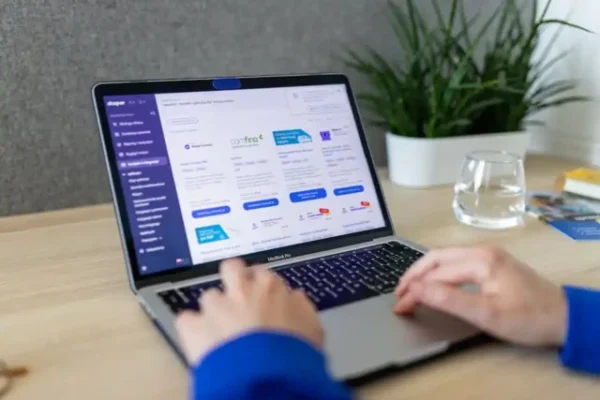
But the painful truth is that this is exactly how most Hungarian SME websites behave. It's on the internet, they pay for the hosting, the domain, it might even look nice - but it just sits in the corner. An expensive, passive digital business card that takes money instead of bringing it.
But it doesn't have to be that way.
The price of „Business Card Syndrome”
Many business leaders still think of the website as a necessary evil. „So be it, because someone else has one.” This attitude might have worked in 2010, but in 2025 it's business suicide.
When a visitor arrives on your site, they're not there to admire your logo. They have a problem. They have questions. They're looking for a solution.
If all your website says is „Here we are, this is who we are, this is the year”, your visitor will do one thing: Click. The „Back” button.
And in that moment you lost a potential deal that could have meant hundreds of thousands or millions of dollars.
A profitable website does 3 things for you, 24 hours a day:
1. Builds trust immediately
(The first 50 milliseconds) You don't get a second chance to make a first impression. Psychological fact: people make decisions based on their emotions and only afterwards justify them back with logic. If your site is slow, falls apart on mobile, or has an unprofessional feel, the visitor's brain immediately sends a red flag: „This company is not professional. I can't trust them.” Looking professional is not a vanity issue. It's the entry point to the customer's wallet.
2. Hold hands and guide the visitor
The passive website leaves the visitor to wander. An active website has a purpose. Every sub-page, every button, every sentence has a single purpose: to lead the visitor to the next step.
He doesn't want to read about „us”, he wants to read about how you are solving his problem.
It's not the list of features you want, but the benefits you get.
3. You will not leave empty-handed
Your best salesperson will never let an interested party leave without knowing something about them. A well-constructed page works with „call-to-action” elements. Whether it's a request for a quote, a newsletter sign-up or an appointment booking - it's all about conversion.
Investment vs. Cost
If a website costs 500,000 HUF and generates zero revenue, it is an expensive cost. If a website costs 1,500,000 forints, but generates 3,000,000 forints of new business automatically every month, it is the best investment in the world.
So the question is not how much your website costs. It is how much does it cost you to have your current website down?
Don't settle for a „digital business card”. The internet is full of noise. If you want to stand out and get real results, it's not enough to be „up there”.
Turn the path to success. I'll show you how.